Action plan · New business ideas
Restored Antique Decor for NYC Homes
$1,000 – $10,000 · Part-time · 15–20 hrs/week · Hybrid (online + local) · Local (my city / area) · New York City, United States
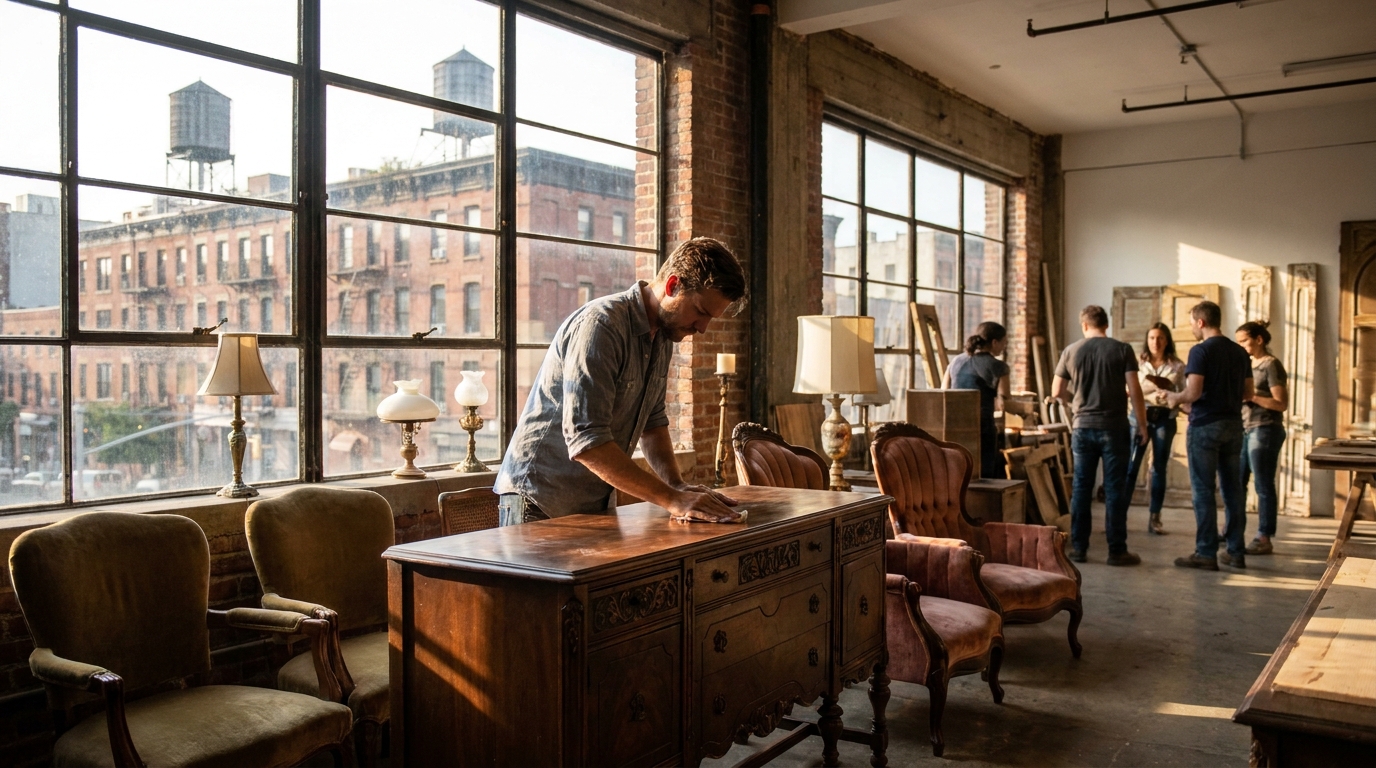
Discover and acquire vintage furniture and decor across NYC. Partner with local restoration experts to bring these unique pieces back to life. Sell them to affluent New Yorkers seeking high-end, one-of-a-kind home accents.
In plain English
You'll source beautiful old items with restoration potential in New York City. Collaborate with skilled local artisans to meticulously restore them. Then, market and sell these high-value, refurbished pieces directly to wealthy individuals and interior designers in the city.
Key numbers
Profit outlook
Revenue is generated through the sale of individually restored antique decor pieces. Profit is the difference between the selling price and the combined costs of sourcing, restoration, and operational overhead.
Illustrative projection based on assumptions — not a guarantee.
Assumptions used in this projection
- Average Net Profit per Item Sold$400
- Variable cost per customer / month$50
- Fixed costs / month$300
Is this price realistic? The average net profit of $400 per item sold is achievable by sourcing pieces below market value, investing in quality restoration, and targeting affluent buyers willing to pay a premium for unique, high-end decor.
Based on ~4 paying customers
$1,100 net profit / month
Based on ~8 paying customers
$2,500 net profit / month
Based on ~12 paying customers
$3,900 net profit / month
Net profit by month
How net profit may grow in the first 6 months after launch (ramp-up to the steady levels above).
Who it fits
This plan is ideal for individuals with an eye for antiques, a passion for local craftsmanship, and strong networking skills. It leverages hands-on sourcing and local partnerships for high-margin B2C sales in a luxury market.
Local competitors
Short nbiplus profiles of nearby businesses — strengths, gaps, and how to compete. Not their official websites. Open a snapshot for Maps and a real site link when we have one.
8–20 similar businesses nearby (estimate)
The NYC antique and decor market is fragmented, comprising numerous small independent shops, high-end galleries, and various online platforms. Our unique value proposition lies in curating and professionally restoring pieces, offering them through a hybrid online and local model to discerning buyers.
ABC Carpet & Home
Strengths Established luxury brand, extensive showroom, diverse high-end inventory, existing affluent clientele.
Weaknesses Very high overheads, less focus on individual restoration stories, often new or ultra-luxury antique items.
Local Flea Markets/Estate Sale Vendors
Strengths Low overhead, unique raw finds, potential for good acquisition prices, direct interaction with sellers.
Weaknesses Inconsistent inventory quality, no restoration services offered, limited marketing reach, variable professionalism.
Chairish / 1stDibs (Online Marketplaces)
Strengths Wide online reach, established platforms for vintage/antique goods, vetted seller base, secure transactions.
Weaknesses High commission fees, intense competition from many sellers, less personal branding control, complex logistics for large items.
Startup budget
$7,500 (mid-range for initial inventory and marketing)
- Initial antique sourcing (2-3 pieces) $3,000 40%
- Restoration supplies & contractor fees (initial) $2,500 33.3%
- Website/e-commerce platform setup & 3 months hosting $500 6.7%
- Professional photography equipment/service $300 4%
- Local marketing/advertising (digital & print) $1,000 13.3%
- Business registration & initial insurance $200 2.7%
First demand check (48–72 hours)
In 48-72 hours, research local antique markets and restoration costs in NYC. Contact 2-3 local restorers for partnership interest and pricing. Gauge interest from 5 potential high-end buyers or interior designers.
Local reality check
NYC has a highly affluent population with a strong demand for unique, high-end home decor. While competition from established antique shops and galleries exists, a curated online presence focusing on expertly restored pieces and local partnerships with sourcing and restoration experts can carve out a distinct niche. Access to diverse sourcing options (estate sales, auctions, pawn shops) and skilled restorers is abundant in the region.
Milestones
- First antique piece acquired By day 5
- Partnership with primary restorer secured By day 10
- First 3 restored items listed online By day 15
- First sale achieved By day 30
14-day plan
- Conduct detailed market research on NYC antique trends and pricing.
- Formalize business registration and obtain necessary licenses/insurance.
- Identify and secure initial sourcing channels (e.g., estate sales, flea markets, online auctions).
- Set up a professional e-commerce website (e.g., Shopify, Squarespace) with branding.
- Acquire the first 2-3 antique pieces suitable for restoration and target market.
- Begin content creation for social media and initial marketing materials.
- Establish partnerships with 1-2 trusted local restoration experts.
- Initiate the restoration process for the acquired antique items.
- Set up inventory management system and pricing strategy.
- Arrange professional photography sessions for all restored items.
- List the first batch of restored antique decor on the e-commerce site.
- Launch initial targeted marketing campaigns to affluent NYC neighborhoods.
Tools to use
Shopify/Squarespace (e-commerce) · Instagram/Pinterest (visual marketing) · Facebook Marketplace (local sales/sourcing) · Local auction house catalogs/mailing lists · Restoration contractor network (local)
Week-one goal
Identify 5 potential sourcing locations (e.g., flea markets, estate sales, online forums) and initiate contact with 2 local antique restorers for partnership discussions.
Watch-outs
- High cost of sourcing/restoration: Mitigate by establishing clear budget limits per item and diversifying sourcing channels to find undervalued pieces.
- Difficulty finding reliable, skilled restorers: Network extensively within the local artisan community, vet portfolios, and start with small projects to assess quality.
- Slow sales due to niche market: Implement highly targeted marketing to affluent NYC demographics, emphasize unique stories and quality of restoration, and build strong online presence.