Action plan · New business ideas
3D Printed Model Parts: Niche Hobbyist Gems
$1,000 – $10,000 · Part-time · 15–20 hrs/week · Hybrid (online + local) · Global (US, Europe, worldwide)
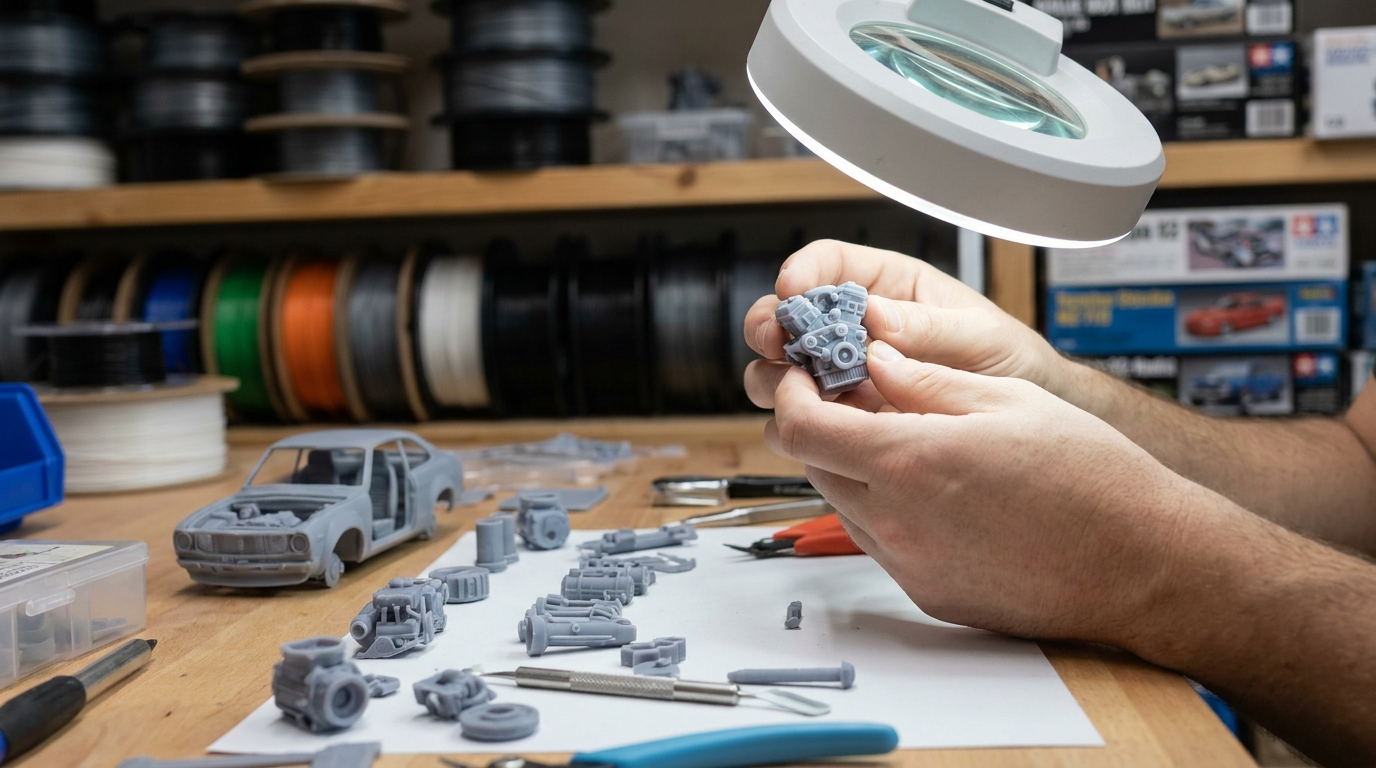
Design and 3D print unique, highly detailed parts for scale models and dioramas. Sell these specialized pieces to passionate hobbyists globally through an online store. This low-risk venture leverages your design skills and 3D printer for a niche B2C market.
In plain English
You'll create custom 3D models of hard-to-find parts for planes, tanks, cars, or diorama elements, then print them on demand. Sell these unique items online to model builders worldwide, letting them enhance their collections with precision-made pieces.
Key numbers
Profit outlook
Revenue is generated by selling highly detailed 3D printed model parts directly to hobbyists through an online store. Profit is realized by subtracting material, production, and platform costs from sales.
Illustrative projection based on assumptions — not a guarantee.
Assumptions used in this projection
- Average sale price per item$15
- Variable cost per customer / month$3
- Fixed costs / month$120
Is this price realistic? An average sale price of $15 per small, highly detailed model part is realistic for this niche, where hobbyists value unique, high-quality components.
Based on ~25 paying customers at $15/mo each
$180 net profit / month
Based on ~60 paying customers at $15/mo each
$600 net profit / month
Based on ~120 paying customers at $15/mo each
$1,320 net profit / month
Net profit by month
How net profit may grow in the first 6 months after launch (ramp-up to the steady levels above).
Who it fits
Ideal for creatives who enjoy design, have a high-detail 3D printer, and want a part-time business with fast payback. It's a B2C model requiring marketing and hands-on production skills.
Startup budget
$3,000 – $5,000
- High-detail Resin 3D Printer $800 – $2,000 58.1%
- Wash & Cure Station $150 – $300 9.3%
- Initial Resin / Filament stock $100 – $200 6.2%
- E-commerce platform subscription (e.g., Etsy/Shopify) $20 – $50/month (initial setup) 1.5%
- Basic CAD software license / training $0 – $300 12.4%
- Marketing & Photography equipment/services $100 – $500 12.4%
First demand check (48–72 hours)
Create 3-5 unique model parts, set up an online store (Etsy/Shopify), and run targeted social media ads for 48-72h. Measure interest and pre-orders.
Local reality check
This venture is highly adaptable to a home-based setup, requiring minimal dedicated space for the printer and post-processing. While an online store ensures global reach, local pickup could be an optional offering, but the primary focus will be reliable international shipping.
Milestones
- First 5 sales achieved By day 20
- 10 unique model parts listed By month 1
- Achieve first positive profit month By month 2
- Establish active community presence By month 3
14-day plan
- Research specific sub-niches (e.g., WWII aircraft, sci-fi dioramas) and identify high-demand parts.
- Set up initial e-commerce store (e.g., Etsy shop or basic Shopify store).
- Source initial 3D model ideas or begin sketching first unique designs.
- Acquire and set up 3D printer and post-processing station.
- Design or adapt first 2-3 unique, highly detailed model parts.
- Perform initial test prints and calibrate printer settings for optimal quality.
- Produce high-quality product photos and detailed descriptions for the first batch of items.
- List first 3-5 products on the chosen e-commerce platform.
- Announce store launch on relevant hobbyist forums and social media groups.
- Monitor initial sales and customer feedback; iterate on product designs and descriptions.
- Plan next batch of model parts based on market research and community input.
- Set up basic social media presence (Instagram, Pinterest) to showcase detailed prints.
Tools to use
SLA/DLP Resin 3D Printer (e.g., Elegoo Mars, Anycubic Photon) · 3D CAD Software (e.g., Blender, Fusion 360, ZBrushCoreMini) · Slicer Software (e.g., Chitubox, Lychee Slicer) · E-commerce Platform (Etsy, Shopify) · Social Media (Instagram, Pinterest, Reddit hobby groups) · Photo editing software
Week-one goal
Launch online store with 5 unique product listings and get 100 targeted website visitors.
Watch-outs
- Low demand for specific niche parts -> Fix: Actively engage with hobby communities to identify desired parts and diversify product offerings based on feedback.
- Quality control issues with 3D prints -> Fix: Implement strict post-processing checks, regularly calibrate printer, invest in quality resin/filament, and offer customer support for replacements.
- Copyright infringement concerns -> Fix: Focus on original designs, public domain models, or parts that are clearly not infringing on existing IPs (e.g., generic architectural elements, custom accessories).