Action plan · New business ideas
Local Harvest Online: Your Farm-to-Table Marketplace
Up to $1,000 · Part-time · 15–20 hrs/week · Hybrid (online + local) · Local (my city / area) · United States
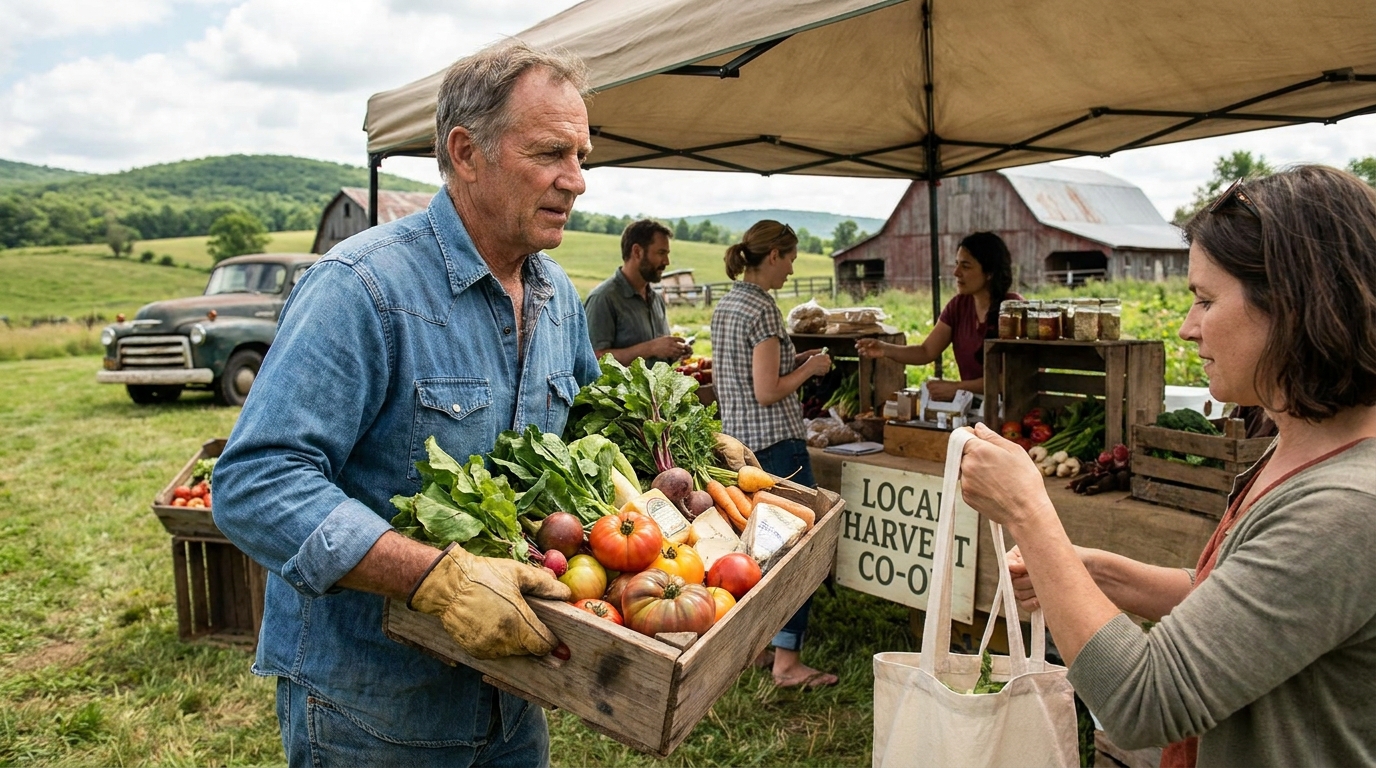
Launch an online marketplace connecting local farmers directly with consumers, promoting fresh, sustainable goods. This platform empowers small-scale producers and fosters community-driven consumption. Start lean, validate demand, and grow your network of local suppliers and buyers.
In plain English
Create a website or app where people can buy fresh produce and artisan goods directly from local farmers and makers. You'll handle the platform, marketing, and payments, while farmers list their products and fulfill orders.
Key numbers
Profit outlook
Revenue is generated through monthly subscription fees paid by local farmers and artisans for listing their products on the marketplace. This model provides a predictable income stream by empowering small businesses with a new sales channel.
Illustrative projection based on assumptions — not a guarantee.
Assumptions used in this projection
- Subscription price / month$49
- Variable cost per customer / month$5
- Fixed costs / month$80
Is this price realistic? A $49/month subscription is realistic for small-scale farmers and artisans seeking a dedicated local sales channel, justifying the fee through increased market access and sales potential.
Based on ~8 paying customers at $49/mo each
$272 net profit / month
Based on ~20 paying customers at $49/mo each
$800 net profit / month
Based on ~40 paying customers at $49/mo each
$1,680 net profit / month
Net profit by month
How net profit may grow in the first 6 months after launch (ramp-up to the steady levels above).
Who it fits
Ideal for entrepreneurs passionate about local economies, sustainability, and building community connections. If you enjoy sales, simple tech setup, and local outreach, this is for you.
Local competitors
Short nbiplus profiles of nearby businesses — strengths, gaps, and how to compete. Not their official websites. Open a snapshot for Maps and a real site link when we have one.
8–20 similar businesses nearby (estimate)
The local market currently has a mix of traditional farmers' markets, broader grocery delivery services, and individual farm websites. There isn't a dominant centralized online marketplace exclusively for local, small-scale producers offering a wide variety of fresh goods with convenient ordering.
Local Farmers' Markets (physical)
Strengths Direct interaction, fresh produce visibility, strong community feel, no platform fees for farmers (only stall fees).
Weaknesses Limited hours/days, weather-dependent, geographical constraints, no online ordering or delivery convenience.
Existing Grocery Delivery Services (e.g., Instacart, local grocers with online)
Strengths High convenience, wide product range (though not exclusively local), established logistics and customer base.
Weaknesses Not focused on local/sustainable sourcing, high commission fees for producers, less transparency on product origins, often prioritize large-scale suppliers.
Individual Farm Websites/CSAs (Community Supported Agriculture)
Strengths Full farmer control, direct relationship with customers, 100% profit margin on sales.
Weaknesses Requires individual marketing effort, high overhead for individual delivery/logistics, limited product variety (only one farm's offerings), often subscription-based with less flexibility.
Startup budget
Refined budget for MVP launch
- Domain Name Registration $15 1.5%
- No-code Marketplace Platform (e.g., Sharetribe Go - 3 months) $150 15%
- Basic Email Marketing Tool Subscription (e.g., Mailchimp paid tier, 3 months) $30 3%
- Graphic Design/Logo (DIY or micro-gig freelancer) $50 5%
- Basic Legal Research / Business Registration (e.g., DBA/Sole Proprietorship) $100 10%
- Local Market Research & Outreach Materials $50 5%
- Contingency Fund $605 60.5%
First demand check (48–72 hours)
In 48-72 hours, create a simple landing page outlining your marketplace idea and gather emails from both potential local farmers and consumers interested in buying. Conduct quick interviews with 3-5 farmers to gauge their interest and pain points.
Local reality check
My city/area boasts a strong agricultural presence and growing consumer demand for healthy, locally-sourced food. While farmers' markets exist, a centralized online platform offering year-round access and convenient delivery/pickup options is a clear market gap, providing an opportunity for local producers to expand their reach.
Milestones
- MVP platform live with 3+ vendors By Day 14
- First 10 consumer orders placed By Week 4
- Achieve positive monthly cash flow By Month 3
14-day plan
- Define target farmer/artisan profiles and ideal consumer demographics.
- Identify and outreach to 5-10 potential local farmers/artisans for initial partnerships.
- Select no-code platform (e.g., Sharetribe Go) and register domain name.
- Set up basic marketplace structure, vendor profiles, and product categories on the chosen platform.
- Design simple, intuitive user interface (UI) and user experience (UX) for both farmers and consumers.
- Integrate a payment gateway (e.g., Stripe Connect) and conduct initial test transactions.
- Create compelling platform content (e.g., 'About Us', 'How It Works', 'Benefits for Farmers').
- Onboard the first 3-5 farmers, assisting them with product listings, descriptions, and high-quality photos.
- Develop a clear farmer agreement outlining terms, conditions, and the subscription pricing structure.
- Conduct internal testing with a small group of friends/family to gather feedback on user experience.
- Prepare initial marketing materials (social media posts, local community group outreach content, flyers).
- Announce a soft launch to a select group of early adopter consumers to gather initial orders and feedback.
Tools to use
Sharetribe Go (No-code marketplace builder) · Canva (Graphic design for marketing materials) · Stripe Connect (Payment processing for marketplaces) · Mailchimp (Email marketing for farmers and consumers) · Google My Business (Local SEO and presence) · Local social media groups (Facebook, Instagram for community engagement)
Week-one goal
Secure commitments from at least 3 local farmers to list their products on your future platform, even if it's just a manual listing initially.
Watch-outs
- Low farmer adoption: Offer attractive introductory rates, provide hands-on onboarding support, and clearly articulate the value proposition of increased sales channels.
- Limited consumer demand/awareness: Focus on targeted local marketing, partner with community groups, incentivize early orders, and highlight convenient delivery/pickup options.
- Logistical challenges (delivery/pickup coordination): Start with a farmer-direct pickup model, then introduce limited delivery zones or partner with a local courier service once volume justifies.