From $20 to $100: The Ultimate Rural Business Challenge in Texas
Want more practical business ideas for the US market?
👉 Follow us on Facebook for daily ideas and tips.
👉 Save ideas on Pinterest — or get them by email.
Turn idea into action
Calculate a business plan for this idea
Log in to generate a plan from this idea. We will reuse the article's niche and context; you only add your market location.
Log in to calculateThe Dartboard Dictates: My Texas Destination
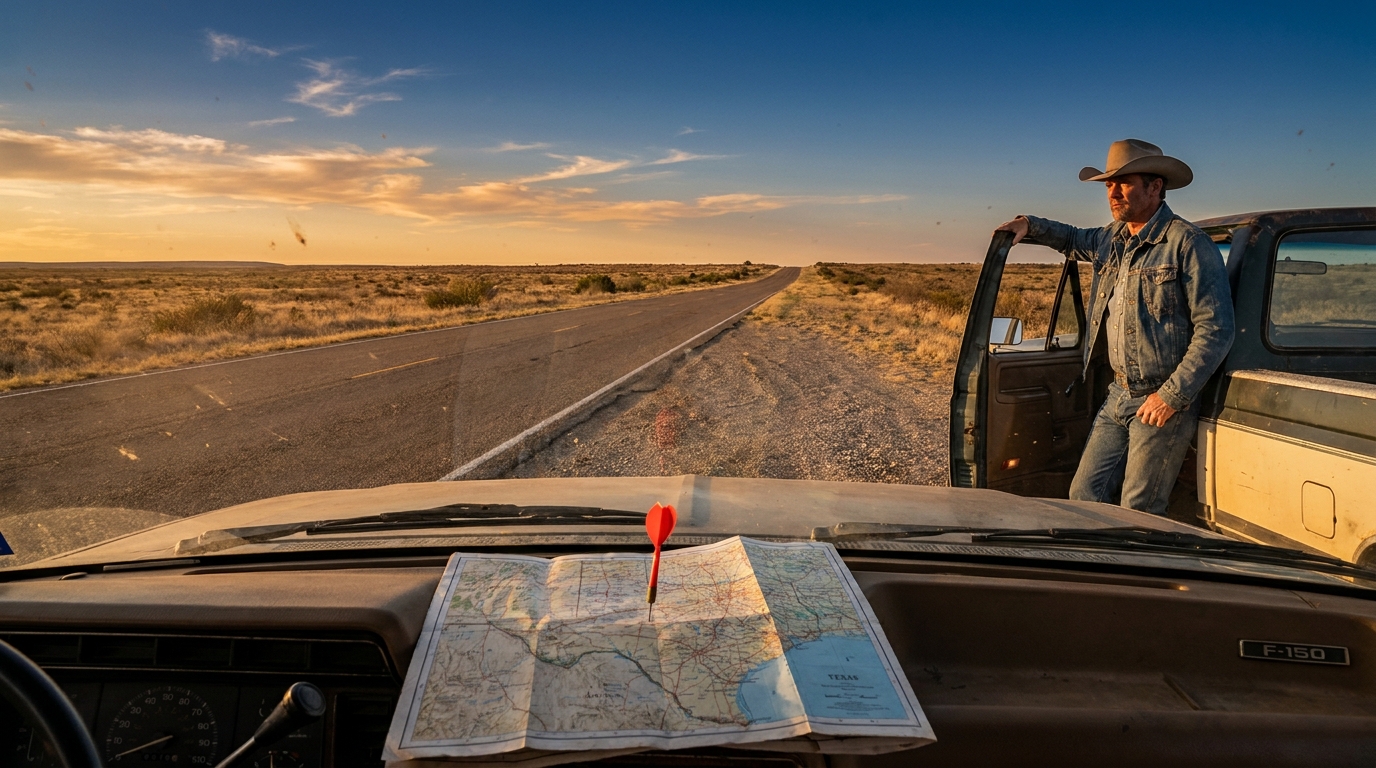
My latest venture began with a simple, yet daunting challenge: to start a viable business from scratch in a randomly selected location in Texas. The method for choosing my destination was decidedly unconventional, designed to push me out of my comfort zone and into an entirely new environment. I unfurled a large map of Texas, armed myself with a dart, and vowed to launch a new enterprise wherever the dart's tip ultimately landed. Secretly, I harbored a hope for a spot closer to home, envisioning a manageable drive and familiar surroundings. However, fate, or perhaps just poor aim, had other plans. After a few throws, the dart pierced the map on a tiny, almost imperceptible dot labeled Flats, Texas – a location I soon discovered was little more than an intersection near the slightly larger town of Emory. This meant a significant, multi-hour drive, but the challenge was unequivocally set. My rules for this entrepreneurial experiment were stringent: no leveraging my existing audience or professional influence, no resorting to an internet-only business model, and, most importantly, I had to successfully double my initial capital of $20 before I could consider returning home. This wasn't just about making money; it was about proving that opportunity exists even in the most unexpected places, with the most minimal resources.
Initial Hurdles: Rural Rejection and Puppy Predicament
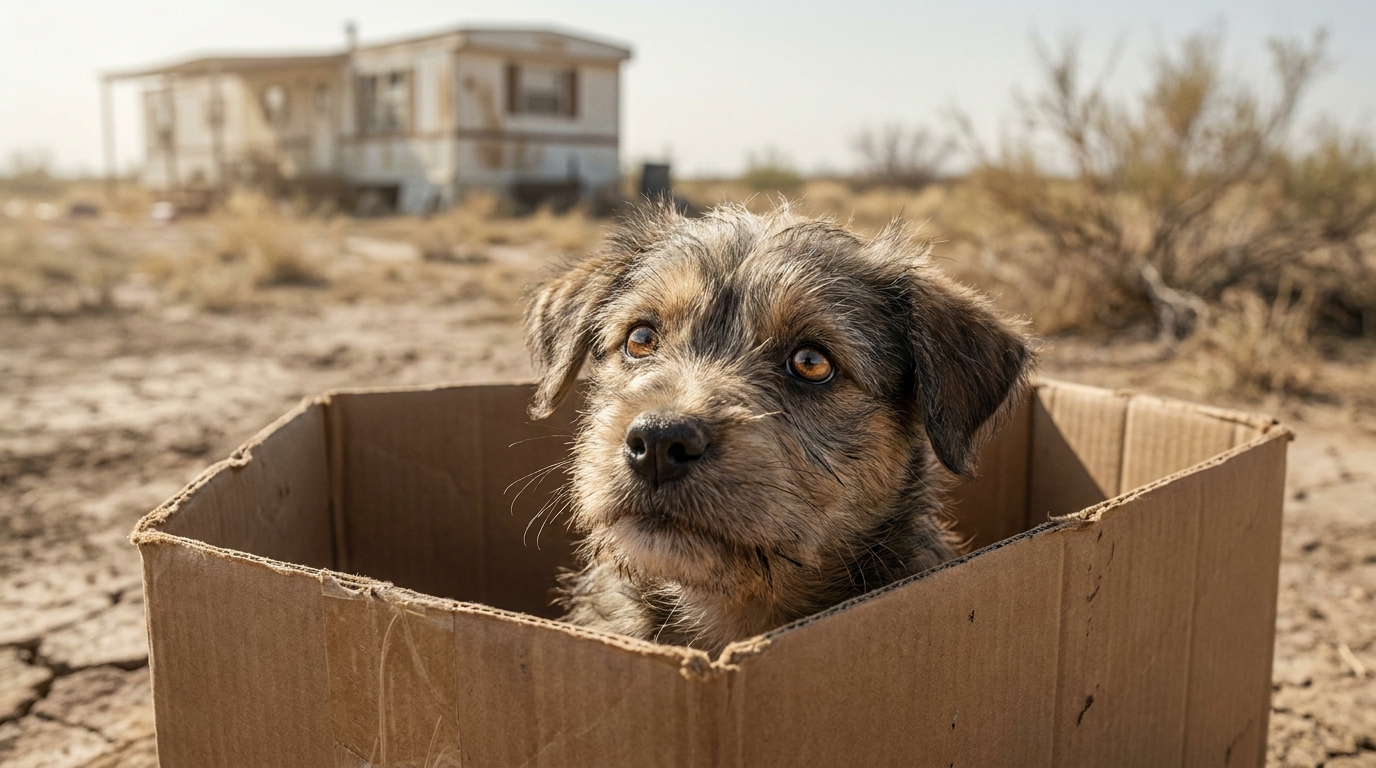
The journey to Flats, Texas, quickly revealed the stark reality of my chosen location. It wasn't a town in the traditional sense, but merely a crossroads marked by a few scattered mobile homes and a dilapidated general store. My initial attempts to find a business opportunity by inquiring with the few locals I encountered proved challenging, to say the least. The post office clerk, after a moment of thoughtful silence, couldn't offer much insight beyond suggesting an online business – a direct violation of my rules. At a small, weather-beaten mobile home, I met Danny, a man with a weary but kind face, who introduced me to five adorable, albeit scruffy, puppies. Their story was heartbreaking: their mother had been hit by a car when they were just three weeks old, leaving Danny with a tough decision. He grimly stated he'd either have to find them homes quickly or, as he put it with a heavy sigh, "deal with them in another way." The unspoken implication was clear and deeply troubling. This wasn't just a business challenge anymore; it was rapidly becoming a humanitarian, or rather, a canine-itarian, mission. My $20 suddenly felt woefully inadequate against the backdrop of these innocent lives.
A Friend in Need: Taking the Challenge to Emory
The predicament of Danny and his five vulnerable puppies weighed heavily on me. Flats offered no immediate solutions for either my business challenge or their plight. It became clear that I needed to pivot, not just for my entrepreneurial goal but for a greater purpose. I decided to head to Emory, the nearest town of any significant size, hoping to find more opportunities. My mind raced, trying to connect the dots: how could I help Danny and the puppies AND double my $20? Selling the puppies directly felt ethically fraught, especially without proper veterinary care or vaccinations. I couldn't simply hawk them on a street corner. The idea struck me: what if I could generate enough capital through a legitimate business venture to not only meet my $100 goal but also provide the resources needed to give these puppies a fighting chance? I began researching local events in Emory and discovered there was a small community fair happening that very weekend. This was my chance. The fairground offered a captive audience, a bustling environment, and, crucially, a potential marketplace. My focus shifted from finding a business in Flats to creating one in Emory, with the ultimate goal of returning to Flats as a benefactor for Danny's furry friends. The pressure was on; my $20 now represented not just a personal challenge, but a lifeline.
The Fairground Hustle: Selling Water and Finding Success
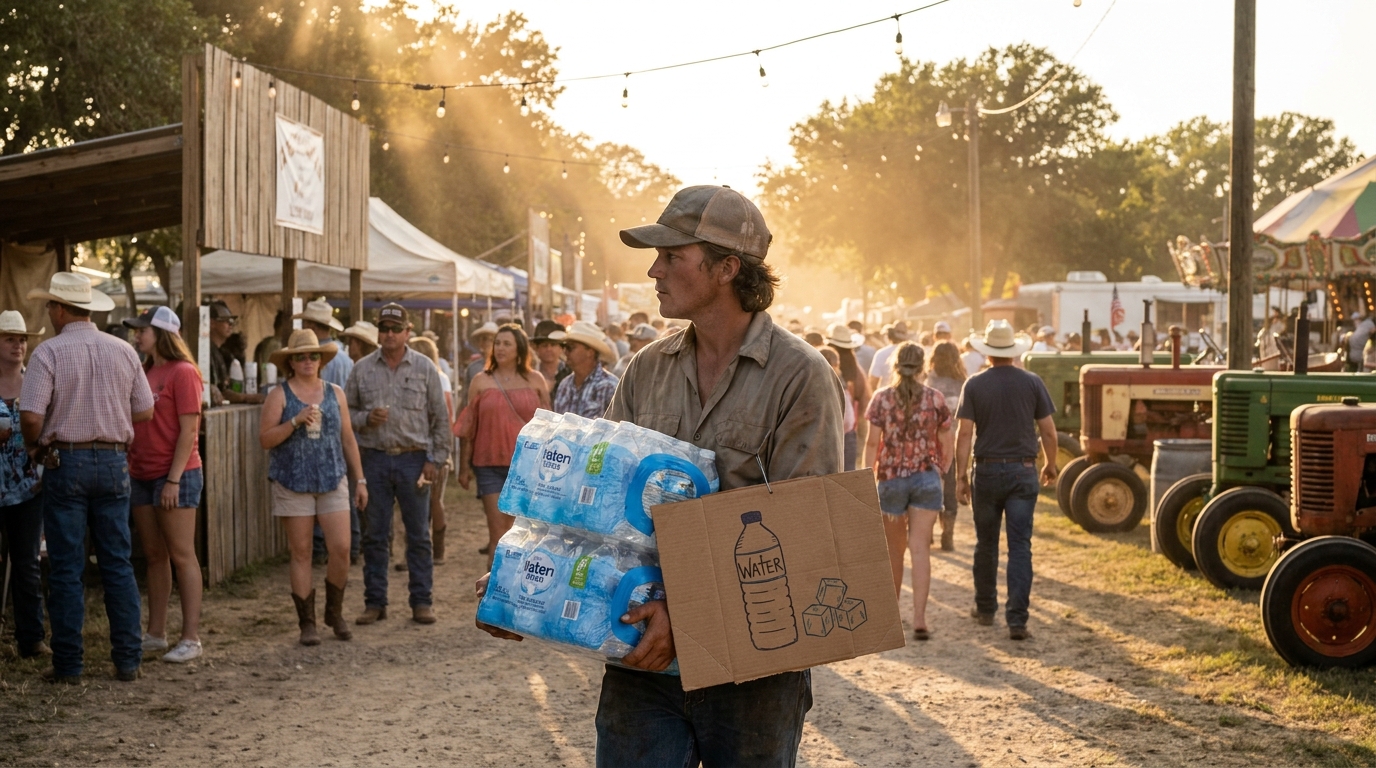
With the Emory fairground identified as my battleground, I needed a product. Given my $20 starting capital, the product had to be cheap to acquire, have a high-demand, and offer excellent margins. The answer was simple: bottled water. Texas summers are brutal, and a fairground full of people would undoubtedly be thirsty. My strategy was straightforward. I drove to the nearest discount store and, with a significant chunk of my $20, purchased five cases of bottled water, each containing 24 bottles, for a total of $18. This left me with a mere $2 in cash. I "borrowed" a cooler from a friendly gas station attendant (promising to return it full of ice) and fashioned a crude but effective sign out of cardboard: "ICE COLD WATER - $1.50." Setting up near a popular attraction at the fair, I began my hustle. The sun beat down relentlessly, making my product an absolute necessity. I engaged with every passerby, cheerfully offering refreshment. The sales were slow at first, but as the day progressed and the heat intensified, demand soared. People were eager to pay $1.50 for a cold bottle. By late afternoon, I had sold all 120 bottles. My total revenue was 120 bottles * $1.50/bottle = $180. Subtracting my initial $18 investment in water, my gross profit was $162. Adding back my initial $2 cash, I had a total of $164. I had not only doubled my initial $20 capital, but I had more than eight-folded it, surpassing my $100 goal with a comfortable margin. The fairground hustle was a resounding success.
Giving Back: Puppies Find a Home
With my $164 in hand, I immediately returned to Flats, eager to share the good news with Danny. The first order of business was to ensure the puppies' health and well-being. I arranged for a mobile vet to visit, providing essential vaccinations, deworming, and a general health check-up for all five puppies. This cost approximately $200, a significant investment but one I was more than happy to make. I also purchased a large bag of high-quality puppy food, some soft blankets, and a few chew toys, spending another $40. With the puppies now healthy and more appealing, I leveraged local social media groups and put up flyers in Emory, advertising them for adoption. I emphasized their sweet nature and their clean bill of health. Within a week, thanks to the power of community networking, all five puppies found loving forever homes. The joy on Danny's face, and the wagging tails of the puppies as they departed with their new families, was a reward far greater than any financial gain. My business challenge had evolved into a mission of compassion, demonstrating that entrepreneurship, even on a micro-scale, can have a profound and positive impact on a community.
Lessons Learned: The Reality of Rural Entrepreneurship
My journey from $20 to over $100, culminating in the successful rehoming of five puppies, provided invaluable lessons in rural entrepreneurship. The most critical takeaway was the absolute necessity of **adaptability**. My initial plan to find a business in Flats quickly proved futile, forcing a pivot to Emory and a completely different strategy. **Resourcefulness** was paramount; with limited capital, I had to think creatively about sourcing materials, from a borrowed cooler to a cardboard sign. The experience highlighted the enduring power of **community** and local connections. Danny's trust, the gas station attendant's kindness, and the local fair's platform were all instrumental in my success. I learned that identifying a simple, high-demand product with excellent **margins** is key, especially when starting with minimal capital. Bottled water, despite its simplicity, was a perfect example. Perhaps the most profound lesson was the importance of having a **purpose beyond profit**. The plight of the puppies became a powerful motivator, driving me to work harder and think more creatively than if it had merely been about personal gain. Rural areas, while presenting unique challenges like limited infrastructure and fewer traditional business opportunities, also offer advantages such as less competition and a strong sense of community. This challenge proved that with grit, strategic thinking, and a willingness to adapt, even the smallest capital can be transformed into significant impact, demonstrating the true potential of rural entrepreneurship.
Want more practical business ideas for the US market?
👉 Follow us on Facebook for daily ideas and tips.
👉 Save ideas on Pinterest — or get them by email.
Note: Comments are being moderated and may take a while to appear. There is no need to resubmit your comment.