Profitable Harvests: The Ultimate Guide to Commercial Blackberry Farming
Want more practical business ideas for the US market?
👉 Follow us on Facebook for daily ideas and tips.
👉 Save ideas on Pinterest — or get them by email.
Turn idea into action
Calculate a business plan for this idea
Log in to generate a plan from this idea. We will reuse the article's niche and context; you only add your market location.
Log in to calculateMarket Opportunity
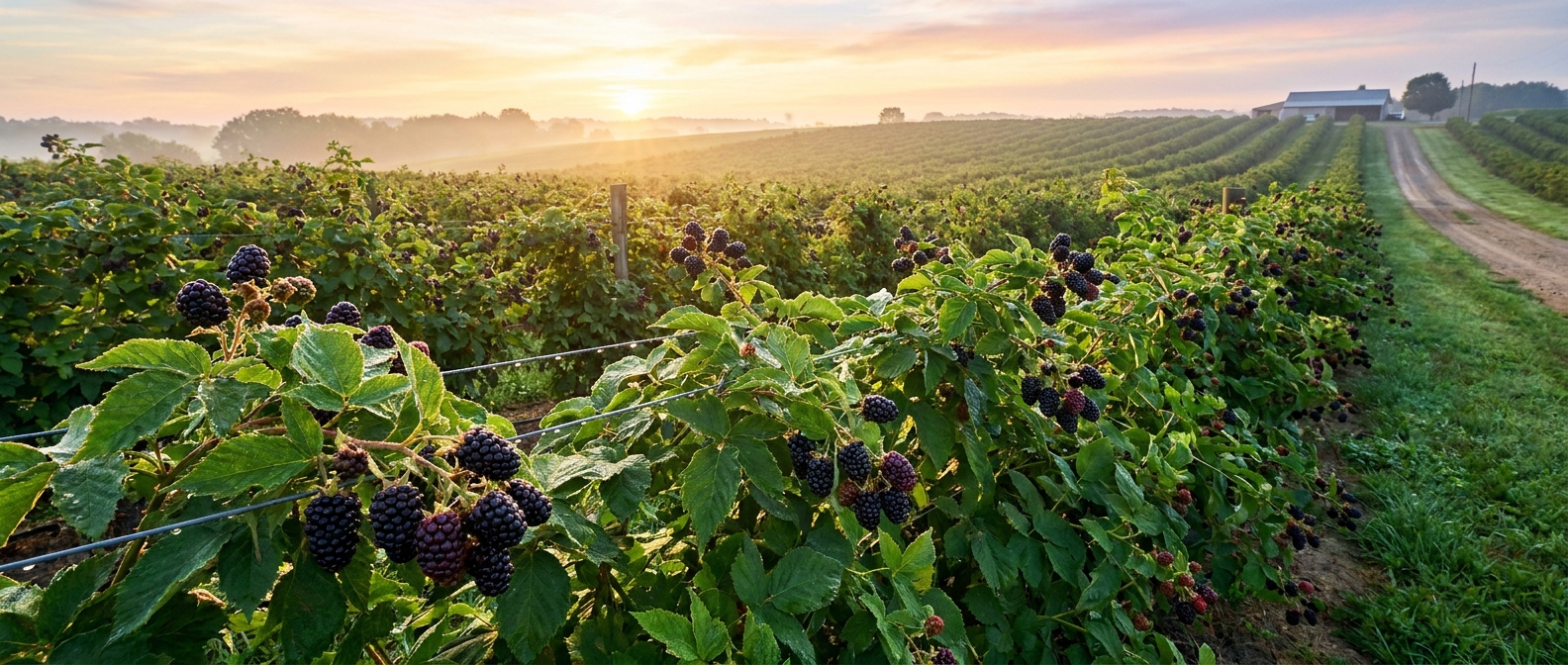
The commercial blackberry farming industry in the US is a highly lucrative agribusiness. Driven by consumer demand for antioxidant-rich superfoods, the market for fresh blackberries has surged. Unlike annual crops, blackberries are robust perennials producing abundant yields for up to fifteen years. Advances in primocane-fruiting varieties have revolutionized the industry, allowing growers to extend harvests into autumn. This window enables farmers to capture premium pricing when summer supplies dwindle. Domestic sourcing provides a distinct advantage for US growers delivering fresher fruit.
Startup Costs
Launching a commercial farm requires significant upfront capital. Assuming you own or lease land, equipping a single acre costs between twelve and eighteen thousand dollars. The most substantial expense is the trellising system, critical for keeping fruit elevated and maximizing sun exposure. A heavy-duty V-trellis costs up to six thousand dollars per acre. High-quality dormant plants add three thousand dollars. Installing commercial-grade drip irrigation for fertigation costs roughly two thousand dollars. You must also allocate funds for soil amendments, weed barrier fabrics, and cold storage facilities to rapidly cool berries.
Operating Costs and Labor
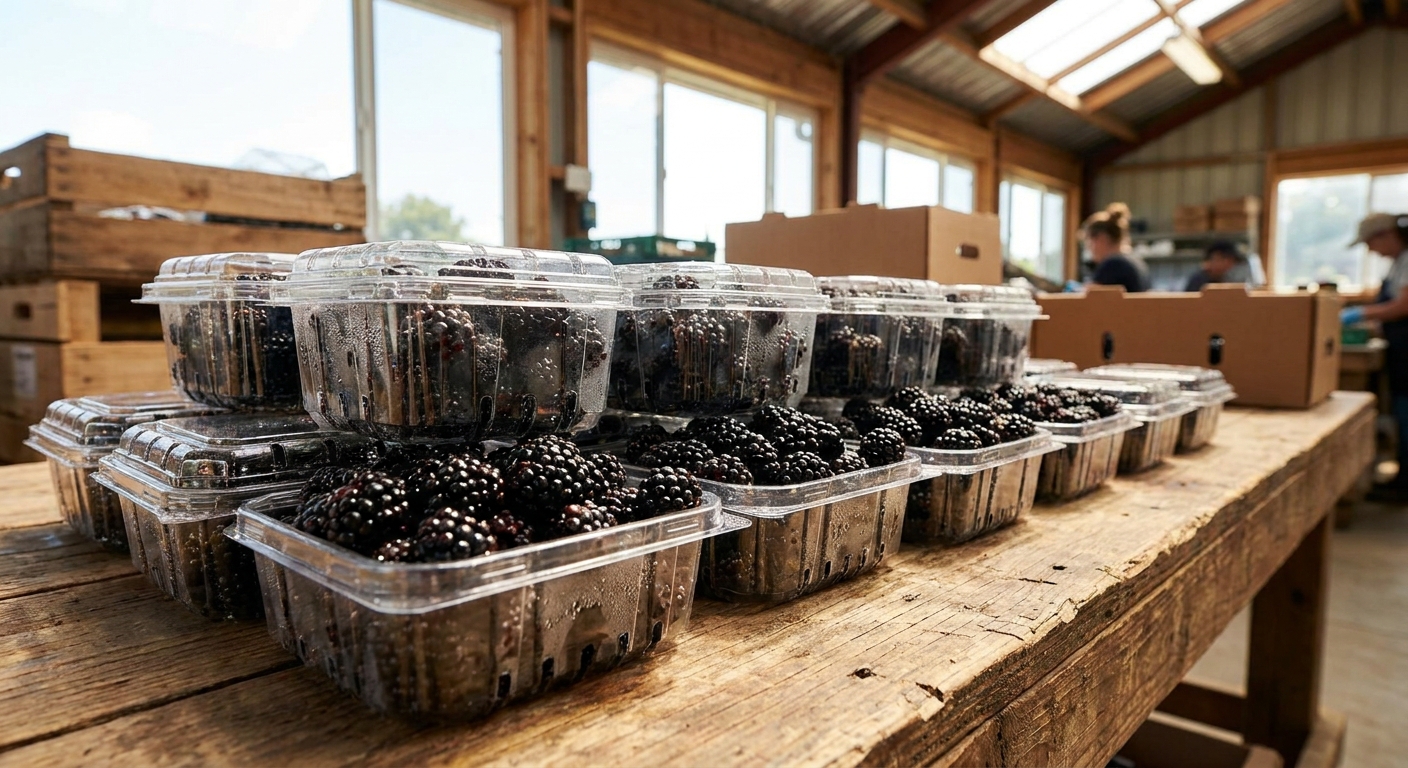
Annual operating expenses range from six to nine thousand dollars per acre. The most substantial ongoing cost is agricultural labor. Blackberries are incredibly delicate and must be hand-harvested to prevent bruising. During peak harvest, a dedicated picking crew is required every three days. This intensive labor consumes up to forty percent of gross revenue. Beyond picking, skilled labor is required for winter pruning, tying canes to trellis wires, and weed management. Other recurring expenses include specialized fertilizers, pest management supplies, and packaging materials like plastic clamshells. Efficient labor management protects profit margins.
Yields and Pricing
Understanding yields and pricing structures is vital for projecting farm revenue. A well-managed blackberry acre begins producing a partial crop in its second year, reaching full maturity by year three. At peak production, a single commercial acre in the US yields between eight and twelve thousand pounds of marketable fruit annually. Wholesale distribution to regional grocery chains typically yields two to three dollars per pound. While wholesale offers volume consistency, direct-to-consumer channels provide higher margins. Selling through local farmers markets and pick-your-own operations allows growers to command premium prices of five to seven dollars per pound.
Revenue and Profit Scenarios
The revenue potential for a mature farm is highly attractive. If an acre produces ten thousand pounds of fruit sold entirely through wholesale channels at two dollars and fifty cents per pound, gross revenue equals twenty-five thousand. Conversely, a hybrid model selling half at wholesale and half directly to consumers at six dollars per pound generates revenues exceeding forty-two thousand dollars per acre. After deducting nine thousand dollars in operating and labor costs, a hybrid-model farm achieves net profits of thirty-three thousand per acre. Realistic net margins settle between thirty and forty percent, recouping initial capital by year four.
Risks and Mitigation
Commercial blackberry farming carries inherent risks requiring proactive mitigation. Extreme weather events, particularly late spring frosts and intense summer heatwaves, can severely damage blossoms. Successful growers invest in shade netting to protect crops from environmental stress. The spotted wing drosophila is a formidable invasive fruit fly that lays eggs inside ripening berries. Combating this pest requires a rigorous integrated pest management strategy, strict sanitation, and timely spray applications. To mitigate spoilage, growers must use forced-air cooling to drop fruit temperature to thirty-three degrees within two hours of harvest.
First-Year Action Plan
A precise first-year action plan establishes a thriving enterprise. Begin by conducting soil tests six months prior to planting, applying necessary lime to achieve an ideal soil pH of six point zero to six point five. Concurrently, order patented, disease-free varieties from reputable commercial nurseries. In early spring, install irrigation infrastructure and construct the trellising system before plants arrive. Once frost danger passes, plant your dormant canes. Dedicate your first summer entirely to vegetative growth, aggressively managing weeds and training new primocanes to the lower trellis wires. Establish a perennial cover crop between rows to prevent erosion.
Want more practical business ideas for the US market?
👉 Follow us on Facebook for daily ideas and tips.
👉 Save ideas on Pinterest — or get them by email.
Note: Comments are being moderated and may take a while to appear. There is no need to resubmit your comment.