Launch a Lucrative Stretch Ceiling Installation Business

Want more practical business ideas for the US market?
👉 Follow us on Facebook for daily ideas and tips.
👉 Save ideas on Pinterest — or get them by email.
Turn idea into action
Calculate a business plan for this idea
Log in to generate a plan from this idea. We will reuse the article's niche and context; you only add your market location.
Log in to calculateStretch ceilings have rapidly become a popular method for interior ceiling finishing. The core concept involves stretching an elastic membrane—typically PVC film—and securing it to a specialized frame along the perimeter of a room. This creates a perfectly flat surface that elegantly hides the original ceiling and structural imperfections. For entrepreneurs, installing stretch ceilings offers an accessible entry into the home renovation market, focusing purely on installation rather than complex manufacturing.
Streamlined Workflow and Setup
A major advantage of this business is the minimal upfront infrastructure required. Initially, you do not even need a commercial office. The workflow is straightforward: receive an inquiry, visit the site for measurements, order the custom-cut PVC canvas from a local supplier, purchase consumables, and complete the installation. For small rooms, a project can be finished in a single day. Complex architectural designs rarely take more than three to five days. Local manufacturing facilities that produce the ceiling materials are found in almost every city. They purchase PVC film in massive rolls, cut it to your exact dimensions, and attach the necessary harpoon fastening systems.

The unit economics are highly favorable. The wholesale cost of raw materials is low, while the turnkey price charged to the customer allows for excellent profit margins. The raw material costs a fraction of the final turnkey price, allowing for high markups based on the canvas texture and room complexity. To execute installations, you need a small crew of two to three workers. The technology is simple to master, making it possible to train individuals quickly. Many successful businesses in this niche are started by groups of friends or energetic students looking for hands-on work.
Essential Tools and Target Audience
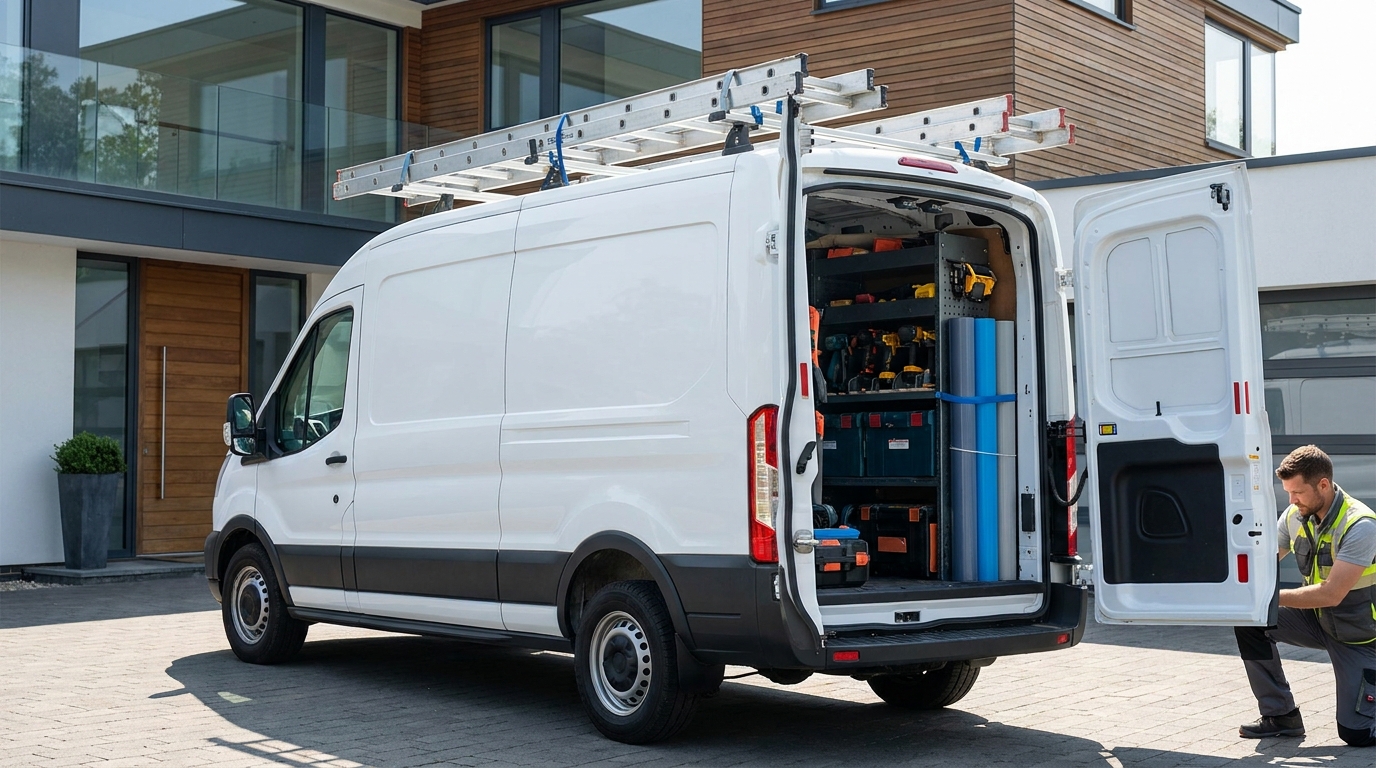
Equipping your team requires a modest investment in standard construction tools. Your arsenal should include a rotary hammer, cordless drill, laser level, metal hole punch, spatulas, tape measures, utility knives, and stepladders. The total cost for this equipment is quite low, generally equivalent to a few hundred dollars. However, your crew will absolutely need a dependable vehicle to transport tools and materials to job sites. Small cargo vans like a Ford Transit or Fiat Ducato are ideal. If you do not own a suitable vehicle, purchasing or leasing one will be your primary startup expense.
Identifying your target audience is critical for sustained growth. Your client base is diverse, encompassing buyers of newly constructed apartments, owners of older homes planning renovations, landlords preparing rental properties, and owners of commercial spaces like offices, retail stores, and medical clinics. Establishing B2B relationships with interior designers, architects, and general contractors who frequently seek reliable subcontractors can provide a steady stream of high-value projects.
Marketing Strategies and Profitability
To acquire first clients, placing targeted advertisements on online classifieds and local service directories is a practical start. However, because the barrier to entry is low, competition can be fierce. To capture significant market share, you must leverage a comprehensive digital marketing strategy. This includes developing a professional website optimized for local search engine queries, running targeted contextual advertising campaigns, and utilizing social media to showcase your portfolio. Building a visual presence by posting high-quality before-and-after photos of completed projects is essential. Encouraging satisfied customers to leave positive reviews on local directories will dramatically boost your credibility.
The earning potential in this sector is substantial. Net profits depend on order volume, operational speed, and marketing efficiency. On average, a dedicated installation team can generate steady, high-margin income. Installing stretch ceilings in just ten standard-sized apartments per month yields very comfortable gross revenue. If you operate with partners, profits are typically divided equally among installers. If you are a business owner employing a hired crew, industry practice is to split revenue evenly with workers. This model yields significant net profit even with a light workload of two to three installations weekly. The return on investment is highly attractive; if you purchase a work vehicle, expect to recoup the investment within six months. If you already own a van, hand tool costs are typically recovered after just four or five completed orders.
Want more practical business ideas for the US market?
👉 Follow us on Facebook for daily ideas and tips.
👉 Save ideas on Pinterest — or get them by email.
Note: Comments are being moderated and may take a while to appear. There is no need to resubmit your comment.