Big Data - Fading Trend or Promising Direction in IT?
Want more practical business ideas for the US market?
👉 Follow us on Facebook for daily ideas and tips.
👉 Save ideas on Pinterest — or get them by email.
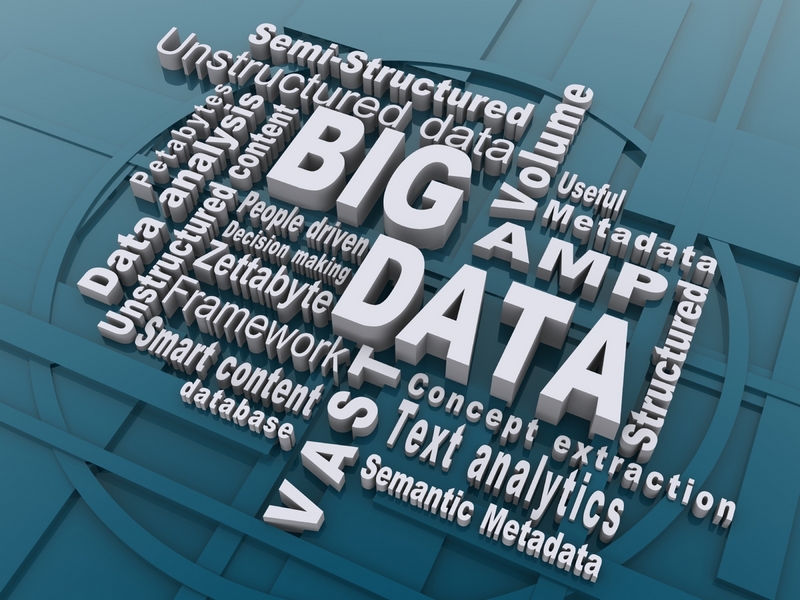
Information is one of the most valuable resources in the modern world, possessing large amounts of which can significantly enhance business efficiency. In recent years, the advancement of modern technologies and the increasing role of the internet in people's lives (social networks, major online stores, search engines, etc.) have allowed various entities to accumulate vast amounts of information. Processing and analyzing this information can greatly benefit large businesses or government organizations. Recognizing the need for developing technology to work with large data sets has led to the emergence of the term BigData, which has become one of the most discussed trends in the IT sector in recent years.
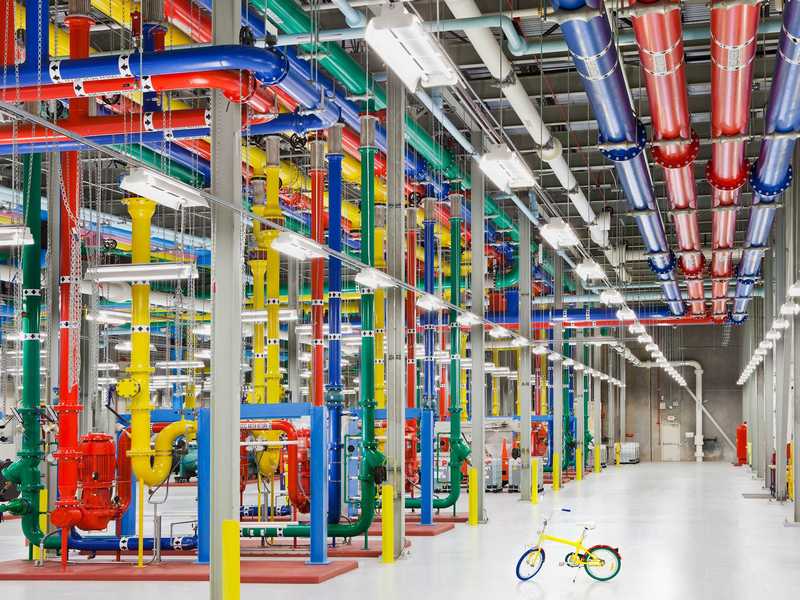
Despite many large corporations investing tens of millions of dollars annually in developing technologies for handling large amounts of data, BigData has its fair share of critics who doubt the feasibility of advancing these technologies. If you have a business idea related to this sector of the IT industry, it is worth examining the opinions of both sides.
What BigData Represents Today
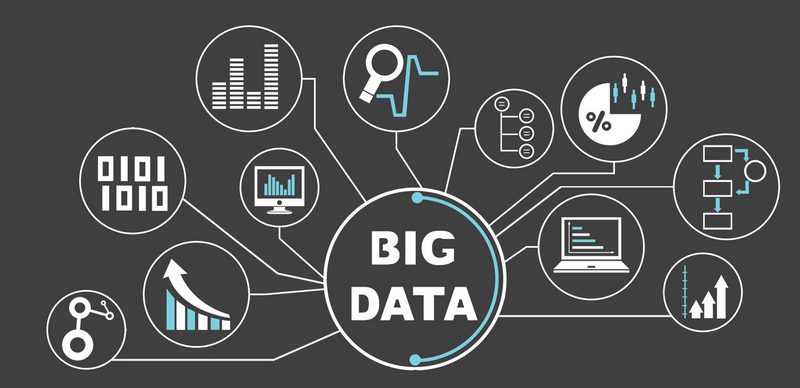
While debates among specialists continue regarding the precise definition of the term BigData, most lean towards the notion that it encompasses not only large volumes of information that are challenging to process using standard methods but also software and hardware capable of handling this task.

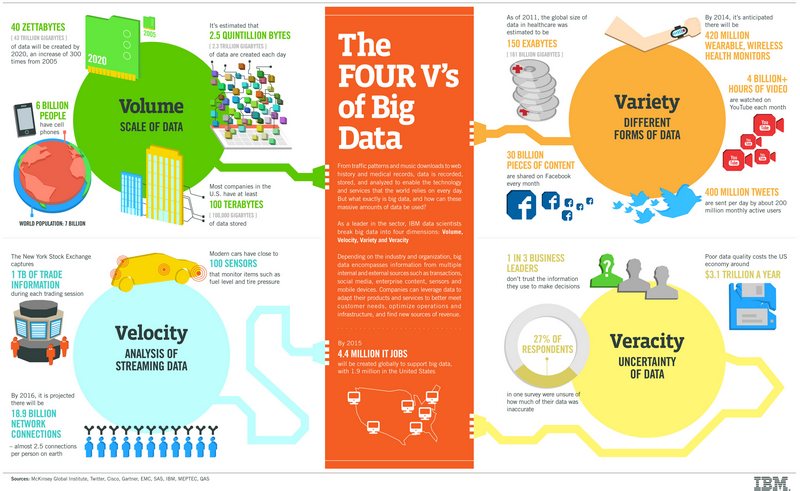
According to experts, BigData exhibits the following distinctive characteristics:
- Large volumes of information that are too complex to store and process without enhancing traditional tools.
- Rapid data accumulation - data collection speed is constantly increasing, with 90% of existing data accumulated in just the past few years.
- Diversity of structured and unstructured data types (audio, video, text, social media information, etc.) in varying formats that require simultaneous processing. Currently, 80% of stored data is unstructured and difficult to process without a comprehensive approach.
- Data validity - ensuring data accuracy for practical purposes is essential. For instance, clearly determining whether actions on a site were made by real users or bots.
- Data value - processed data must hold tangible value for the company conducting the research (business process optimization, cost reduction, reporting, etc.).
The Institute IBM conducted statistical research showing that BigData is primarily utilized for enhancing customer service by 53%, improving operational efficiency by 40%, and managing risks by 7%.
For practical use, BigData employs three types of technologies:
- Software: SQL programming language for database operations; NoSQL - a set of techniques for working with dynamic databases like social networks; MapReduce - a model for parallel computation; Hadoop - a tool for managing contextual and search mechanisms of large sites; SAP HANA - a platform capable of high-speed data processing.

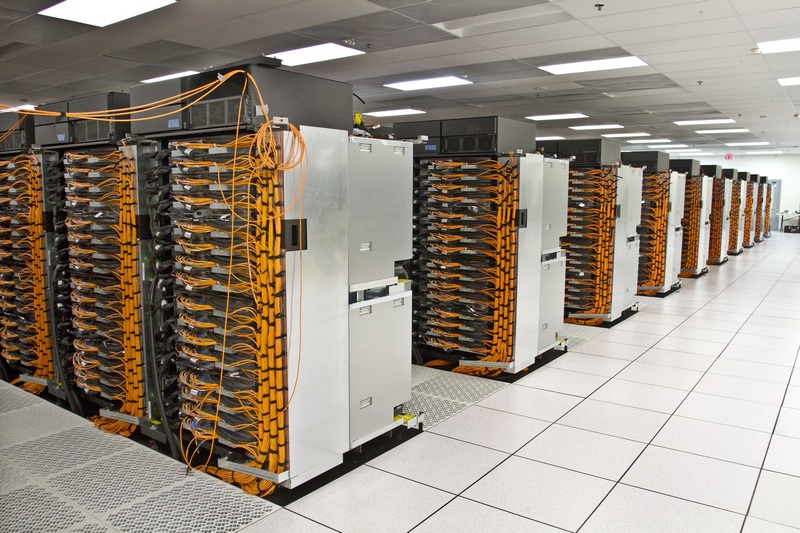
- Hardware: computer clusters are used for data storage and processing, ensuring uninterrupted operations and data integrity preservation through their design.
- Service maintenance: involves constructing computer hardware architectures, optimizing infrastructure, resolving issues, etc.
The following business sectors are most interested in processing and analyzing BigData:
- Retail - such information enables optimization of all business processes from customer interactions to enhancing logistics.
- Finance - involves working with credit histories, offering clients the most relevant banking products, and combating fraudulent schemes. BigData in finance also aids in fraud prevention.
- Mobile operators - analyze data to retain existing clients and attract new ones.
- Mining industry - data sets are processed to assess the feasibility of developing deposits, forecast market demands, and control equipment reliability.
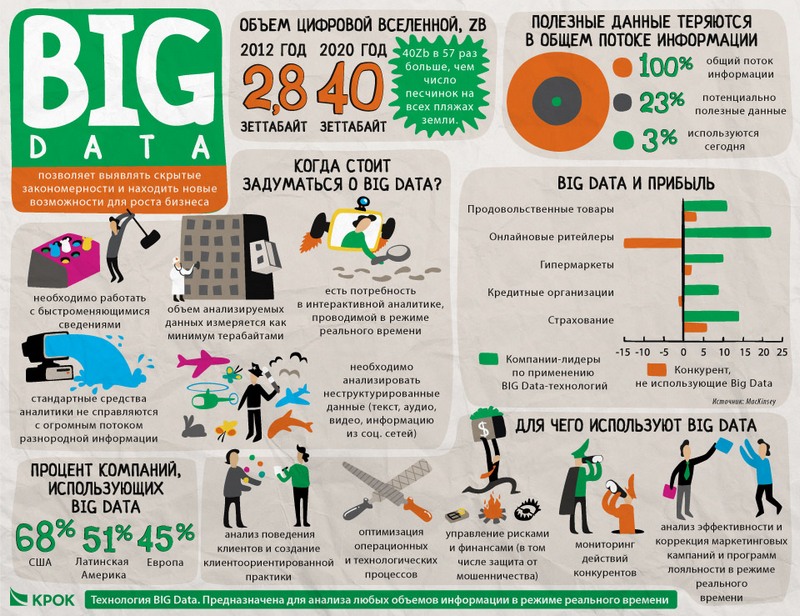
Today, many companies already leverage BigData resources to optimize their businesses. Examples include giants like Google, Facebook, Visa, CocaCola, and others.
Criticism of BigData Technologies

Despite the exponential growth in accumulated data and the expectation of even more data with trends like the "Internet of Things" in the future, BigData faces critics who provide constructive criticism.
Many IT industry specialists primarily argue that data storage and processing technology is consistently evolving and will soon be capable of real-time information processing. In this scenario, BigData technologies will simply become obsolete, much like what happened with Web 2.0 concepts.

It is also often claimed that discussions around BigData are merely a marketing ploy, offering no real benefits and not justifying the huge investments made in developing information processing technologies.
Another area for criticism is the moral and ethical implications of using such vast amounts of data that may contain personal information of millions of people. Proponents of conspiracy theories perceive a risk of total surveillance by intelligence agencies or criminal organizations.

Despite criticism, more business representatives are recognizing the value of working with large volumes of information each day. Since creating an in-house department capable of handling BigData technologies is challenging for many companies, the demand for outsourcing in this area is expected to rise in the near future. This indicates that a successful business idea can be built on this technology.
If you enjoyed this article, consider sharing it with friends - perhaps the use of BigData technologies will benefit their business.

Want more practical business ideas for the US market?
👉 Follow us on Facebook for daily ideas and tips.
👉 Save ideas on Pinterest — or get them by email.
Note: Comments are being moderated and may take a while to appear. There is no need to resubmit your comment.