From Skepticism to Success: How to Launch a Multi-Million Dollar 'Sugar Water' Business on Amazon
Want more practical business ideas for the US market?
👉 Follow us on Facebook for daily ideas and tips.
👉 Save ideas on Pinterest — or get them by email.
Turn idea into action
Calculate a business plan for this idea
Log in to generate a plan from this idea. We will reuse the article's niche and context; you only add your market location.
Log in to calculateThe Genesis of a 'Sugar Water' Empire
The story begins with a surprising revelation: a company on Amazon has managed to sell between $20 and $30 million worth of what can only be described as 'sugar water.' This seemingly simple product—hummingbird nectar—intrigued Sam, who discovered its basic composition from his mother's homemade recipe: just sugar and water.
A quick search on Amazon confirmed his suspicions. Commercial hummingbird nectar, often laden with preservatives, was being sold at a premium, with one popular 64oz jug priced at $11. What truly caught his eye, however, was the sheer volume of sales: 80,000 customers had purchased the product more than once. Based on an industry average of 1% review rate, this implied approximately 2.4 million purchases, translating to a staggering $26.4 million in total revenue for a product costing pennies to make.
From Twitter Challenge to Product Launch
Inspired by this discovery, Sam shared his findings on Twitter. Naturally, an anonymous account quickly challenged his enthusiasm, stating, 'It's not that easy.' This dismissive comment fueled Sam's entrepreneurial spirit, planting a 'chip on his shoulder' and motivating him to prove the naysayers wrong.
He woke up the very next morning with a clear mission: to launch his own 'sugar water' business.
The Hummingbird Food Co. Takes Flight
Sam wasted no time, launching HummingbirdFood.co within what he humorously claims was just 12 minutes. His product, a 'nectar mix,' is essentially pure cane sugar packaged in branded bags, which he openly states on his website. The operational setup was as lean as possible: he purchased 50-pound bags of sugar from a local grocery store for $39.97 and used a $20 heat sealer from Amazon to package the sugar in his garage. He's currently processing and shipping around 120 pounds of sugar weekly.
His product is sold in 2-pound bags for $18, primarily in multi-packs to boost the average order value. This strategy yields an impressive gross margin of approximately 80%, given the minimal cost of goods sold (around $3.51 per unit, including basic packaging and labeling).
Operational Hacks: From Grocery Store to Shopify
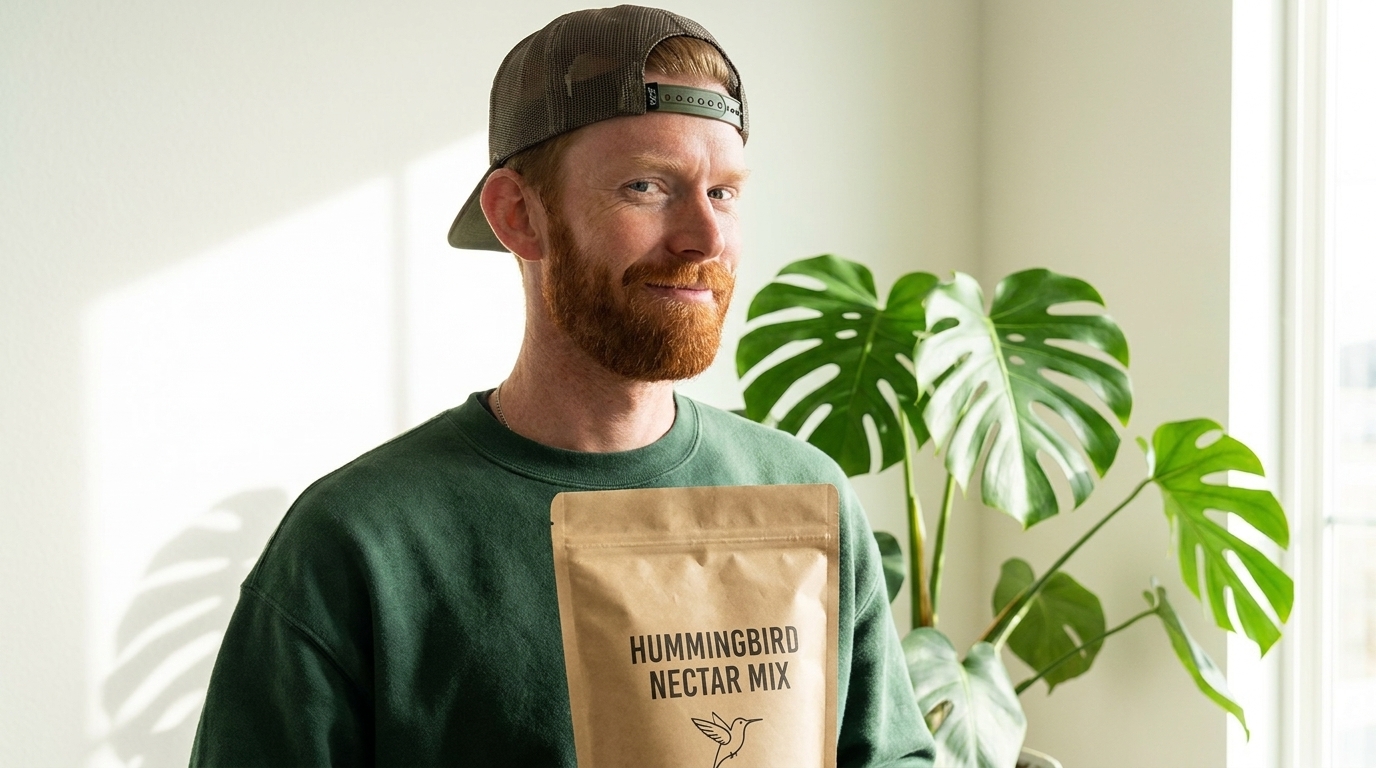
To keep costs low and operations agile, Sam leveraged several innovative hacks. For product visuals, he turned to AI (ChatGPT), generating diverse scenes and ad creatives, including images of people holding his product. His e-commerce store was swiftly built using Solodrop, a platform known for its quick setup.
For marketing, Sam launched Facebook/Meta ads, employing an ad set budget optimization (ABO) strategy. He ran multiple creatives, allocating $100 per day to each. Facebook's algorithm then optimized spending towards the best-performing ads, which were subsequently moved into a 'winning campaign' for scaling. This lean approach quickly generated around $5,000 in sales within the first two and a half weeks.
Leveraging AI for Marketing and Growth
Beyond the core product, Sam also developed a 'Hummingbird Attraction 101' e-book, priced at $14. This digital product, created entirely with AI, boasts zero cost of goods sold, making it a highly profitable upsell that further boosts average order value. The e-book was generated using ChatGPT with simple prompts, demonstrating the power of AI for rapid content creation.
Sam's strategy highlights the efficiency of leveraging AI for both creative content and product development, significantly reducing the initial investment and time-to-market.
Scaling with Strategy: A Six-Figure Vision
With an average order value (AOV) hovering between $45 and $50 and a customer acquisition cost (CAC) of around $14, Sam sees immense potential for scaling. He aims to achieve $1 million in annual revenue with a 10-20% EBITDA margin, believing he can capture just 1% of the market. He plans to transition from his current direct-to-consumer model to selling on Amazon by next summer, anticipating increased market demand during 'hummingbird season' (May to September).
However, shipping costs present a significant challenge, with an average of $12 per 6-pound shipment from Los Angeles to Tennessee. To mitigate this, Sam plans to reduce COGS further by ordering larger volumes of packaging and potentially lowering the product weight to qualify for more cost-effective shipping options (e.g., under 16oz for first-class mail). He also intends to utilize a 3PL (third-party logistics) provider in a central location like Texas to reduce transit times and shipping expenses.
The Power of Offers and Vehicles
Sam emphasizes a crucial distinction in business strategy: 'offers' versus 'vehicles.' An 'offer' defines the core problem you solve for customers (e.g., helping them make more money, save time, or save money). A 'vehicle' is the method through which you deliver that offer (e.g., a service, a digital product, a software, coaching, or a community). He points out that many entrepreneurs mistakenly jump to building complex software solutions when simpler vehicles could validate market demand with less friction and higher initial margins.
He cites his own journey with CreativeOS, which started as an agency offering 'higher converting ad creatives,' then evolved into a digital product (template packs), and eventually into a software. This iterative approach allowed him to validate demand and generate cash flow before investing in more complex development.

The 'Easy Mode' of Digital Products
Sam advocates for starting with 'easy mode' digital products to validate market interest. His hummingbird e-book was created in mere minutes using ChatGPT, demonstrating how AI can rapidly generate content. He encourages aspiring entrepreneurs to leverage tools like Exploding Topics to identify trending niches and then use AI to create relevant digital products (e.g., e-books, guides, templates) with minimal upfront cost. Examples from trending topics include DIY guides for robotic lawnmowers, inflatable screen projectors, or mini portable air conditioners; 'lovable hacks' e-books; AI-generated digital planners; skincare guides for eyebrow growth serum; and wellness products like lymphatic drainage massage guides or specialized mop soaps.
He stresses that digital products offer a low-risk way to learn the fundamentals of running ads and managing an e-commerce business without the complexities of physical inventory and shipping. By proving market demand with a simple digital offering, entrepreneurs can then strategically invest in more sophisticated vehicles, whether it's a service, a community, or a software. The core message is clear:
Want more practical business ideas for the US market?
👉 Follow us on Facebook for daily ideas and tips.
👉 Save ideas on Pinterest — or get them by email.
Note: Comments are being moderated and may take a while to appear. There is no need to resubmit your comment.